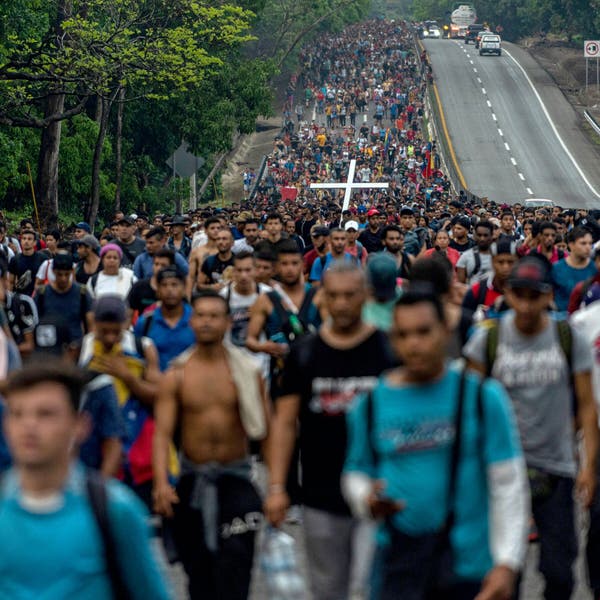
WASHINGTON — Since President Biden took office, migration at the southwestern border of the United States has spiked to record levels, with more than 2.7 million encounters through the end of April.
In the 2021 fiscal year, there were 1.7 million encounters, and in the first six months of the 2022 fiscal year, there have been nearly 1.3 million. Previously, 1986 and 2000 broke records with more than 1.6 million crossings both years.
In recent months, about 84 percent of the people who have been crossing the southwestern border without documentation come from countries that were either not invited to the Summit of the Americas: Cuba, Nicaragua and Venezuela; or those that did not send heads of state in protest to Mr. Biden’s exclusive invite list: El Salvador, Guatemala, Honduras and Mexico. Those four countries opted to send their foreign ministers to the summit instead.
The absences have raised questions about whether there can be productive conversations about the spike in migration at the southwestern border.
That border of the United States has been largely closed to asylum seekers since the beginning of the pandemic because of a public health rule put in place to prevent the spread of the coronavirus. But people have been coming anyway, prompted by hardship at home and Mr. Biden’s pledge for a more welcoming America during the 2020 campaign.
While people from Central American countries have continued to come to the United States to seek asylum, recently there have been more migrants from Brazil, Colombia, Cuba, Haiti, Nicaragua, Peru and Venezuela crossing the southwestern border in search of refuge. People have also come to the United States after arriving in Mexico from Romania, Russia, Turkey, Ukraine and countries in Africa.
Thousands of migrants, including many Haitians, are waiting in Mexican border towns, hoping that U.S. immigration policy will change and they will be able to safely cross into the country.
Even as the Biden administration has publicly said that the southwestern border is closed and has warned migrants not to make the dangerous trek north, it has allowed more than 700,000 people into the country to face removal proceedings. Some were humanitarian exceptions to the public health rule, while others were let in because the United States did not have enough detention space to hold them or they could not be sent back on expulsion flights to certain countries, including Cuba and Nicaragua, because of a lack of diplomatic relations.
The Summit of the Americas is the latest platform where the United States will make a case for a regional approach to migration that includes other countries hosting more refugees fleeing poverty, systemic violence and humanitarian crises and taking steps to secure borders so that it is harder for migrants to reach Mexico’s northern border.
Already, Colombia has offered temporary status to Venezuelans. And the Biden administration leaned on Mexico last year to start requiring visas from Venezuelans in an effort to slow their migration toward the United States.